Inner Mongolia emerges as AI powerhouse fueled by cheap energy
Ulanqab, Inner Mongolia – Amidst sprawling cornfields and grazing Hereford cows, a massive construction boom is transforming a remote corner of China into a global hub for artificial intelligence. New transmission towers and wind turbines dot the landscape, powered by a combination of renewable and fossil fuel energy sources destined to fuel sprawling, multi-story data centers built on farmland.

The project, the largest and fastest-growing infrastructure undertaking in China, is reshaping the region, once known primarily for potato farming. Chinese officials hope this development will propel the country toward surpassing the United States as the world’s leading force in AI.
Baletu, a 72-year-old farmer who has cultivated the land for over 40 years, expressed a positive outlook on the changes. “It doesn’t affect my farmland, not at all,” he told CBS News. “It’s good for the area.”
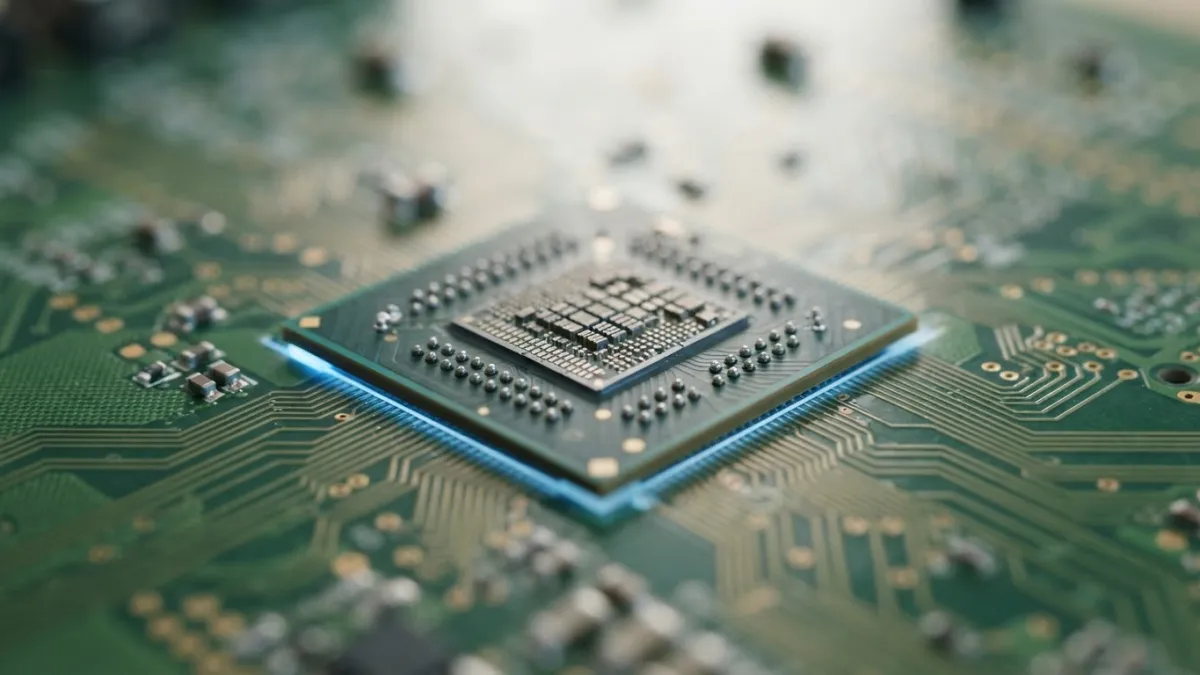
Construction is underway on one of the world’s largest data centers, employing thousands of workers and utilizing extensive new roadways. The sheer scale of the operation is evident from the countless server racks, semiconductor chips, and cooling systems visible even from the roadside.
Ulanqab’s appeal lies in its access to inexpensive and abundant energy. While fossil fuels remain the primary power source, wind and solar energy also contribute. The region’s consistently windy climate and cold temperatures further reduce operational costs, alongside lower land and labor expenses.
According to the Financial Times, data centers in China can be built at roughly one-fifth the cost compared to the United States. Approximately 30,000 workers have been brought in from across China to support the construction, providing much-needed job opportunities amidst a period of economic slowdown and youth unemployment. “Development is the best thing, especially when it provides job opportunities for many young people,” a local businesswoman stated.
Unlike the growing opposition to data centers in the United States, Chinese developers face minimal hurdles. A United Nations survey revealed that approximately 80% of Chinese citizens support data center construction, reflecting widespread adoption of AI technology in daily life.
Under President Xi Jinping, AI development has become a national strategic priority. Henry Wang, founder and president of the Center For China and Globalization, noted the stark contrast between the Chinese experience and the resistance seen in the U.S. “There is no opposition to data centers in China. It’s never heard of, whereas in the U.S., it has become a huge movement against data center building in neighborhoods.”
Major Chinese AI companies, including Huawei, Alibaba, Byte Dance, Deepseek, Baidu, Z.ai, ZData, and VNET, are actively involved in the Inner Mongolian AI hub. Completed areas feature landscaped grounds and avenues named after these tech giants.
While Chinese AI models are currently considered about six months behind their U.S. counterparts due to restrictions on high-end microchip sales, the gap is closing. With more than double the power generation capacity of the U.S., some experts believe access to power, rather than chips, will ultimately determine the victor in the global AI race. “Chips may not become the latest diving criteria,” Wang said. “It may be that power is the bottleneck, and whoever goes through that first gets the advantage. And right now, China has the edge.”
Source
“While many Americans resist, China embraces AI data center boom”
Read the original report ↗This story was written with AI tools from the original report credited above and published after automatic checks. No person read it before it was published. If you spot an error, please tell us: corrections are published on our corrections page. Read our editorial policy · Report an error · Corrections
Read next

China rejects US allegations linking Nvidia CEO to espionage
China has criticized the United States for what it calls fabricated claims of espionage related to Nvidia’s CEO, Jensen Huang, asserting that these…
Related
Caught up in five lines
The Brief: the day’s biggest stories, written by our desk at and .